
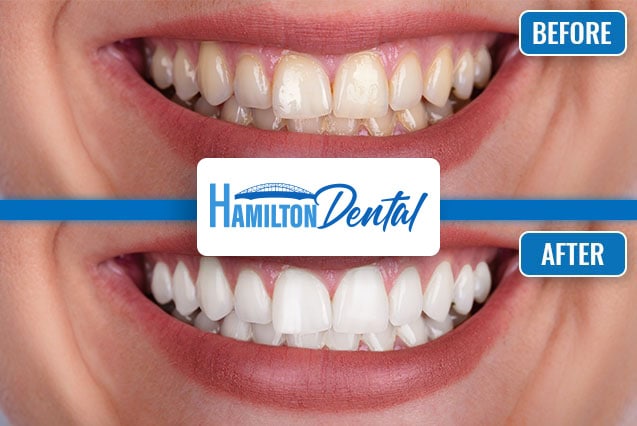
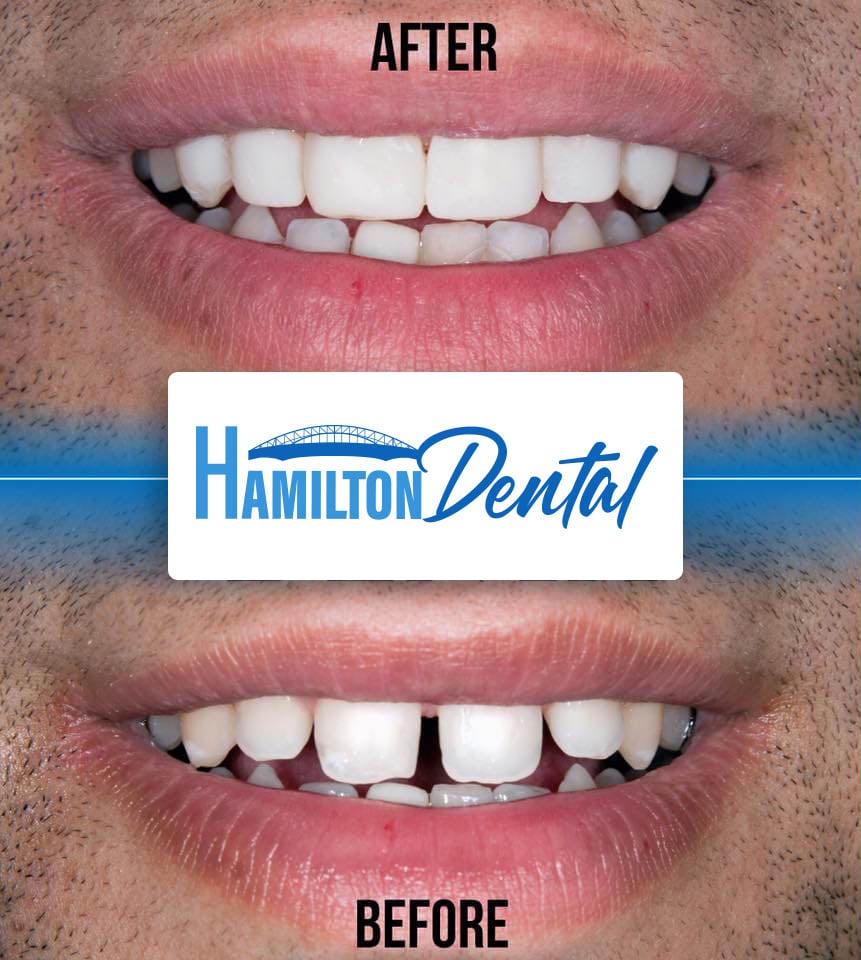
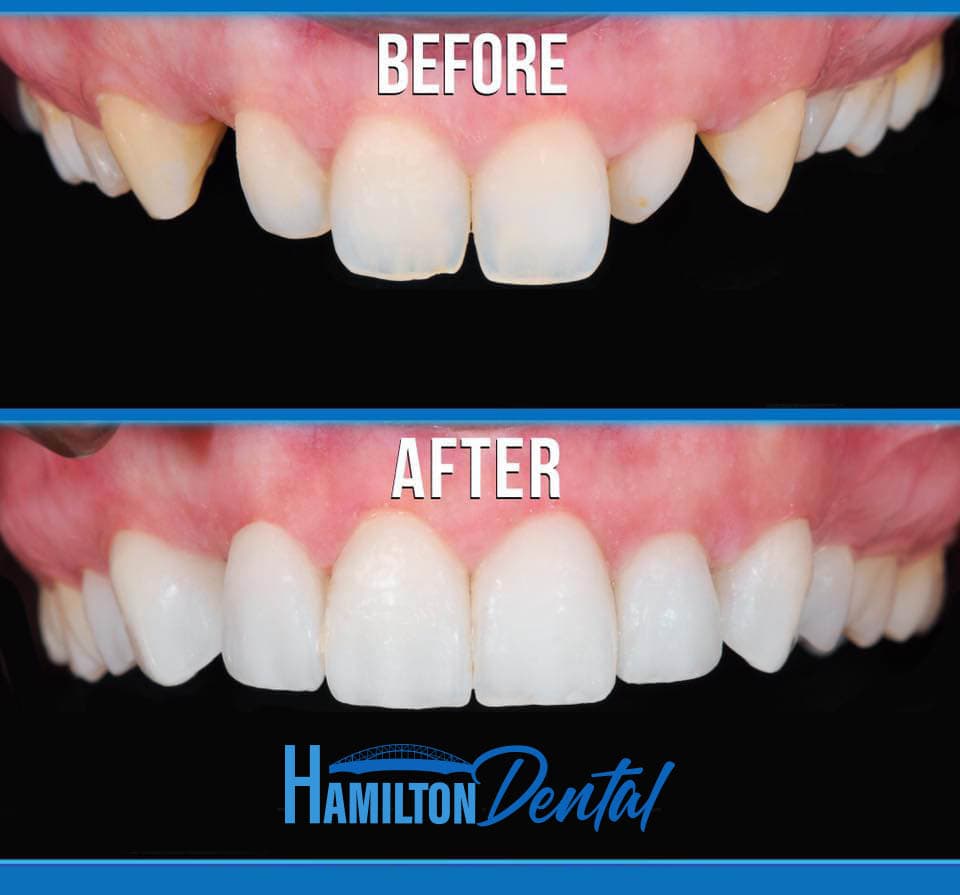
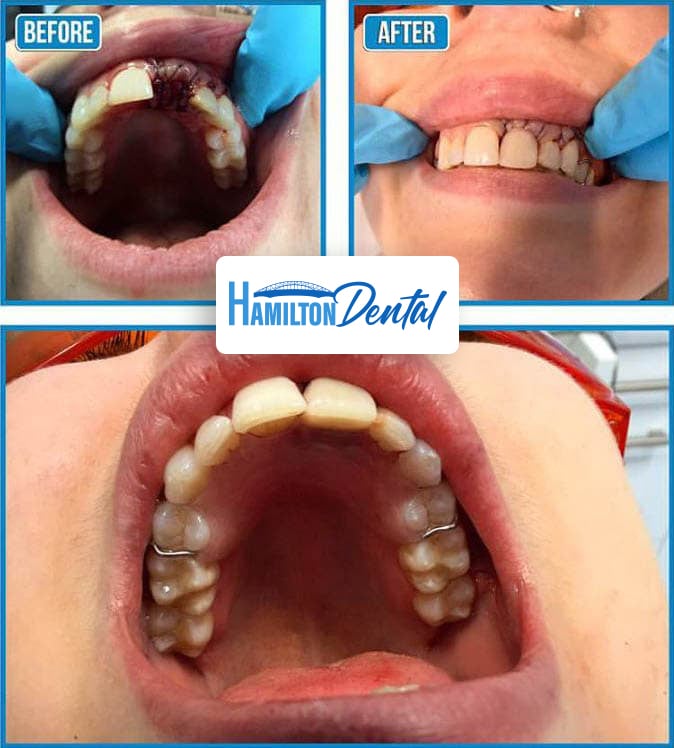
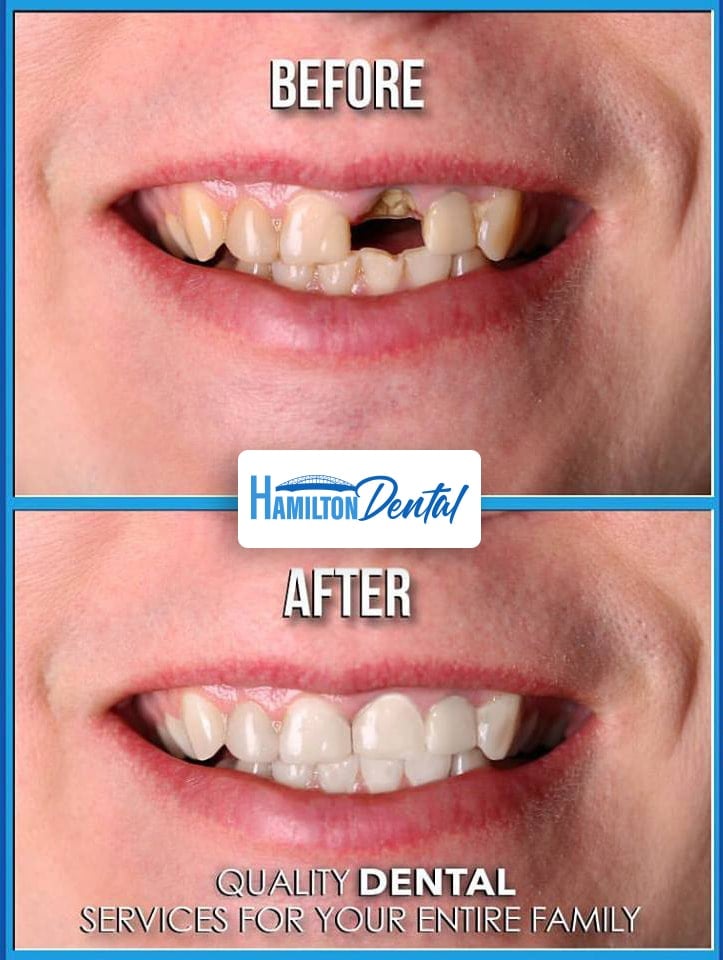
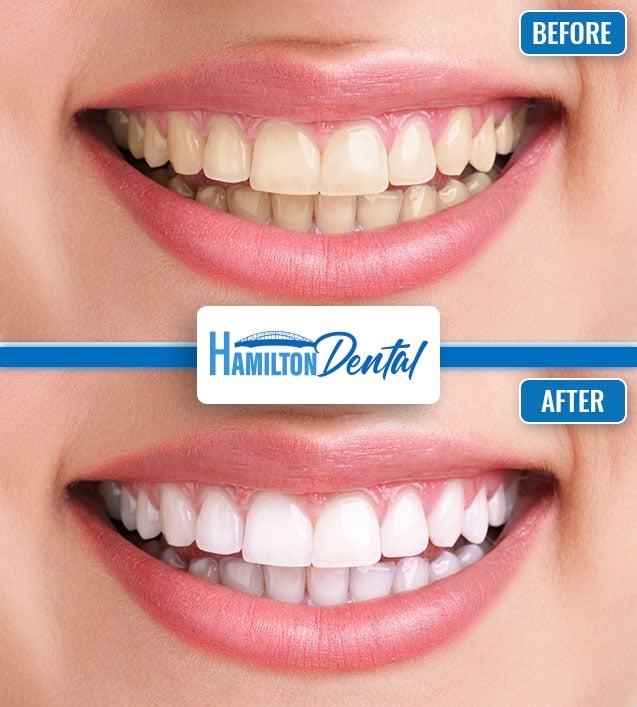
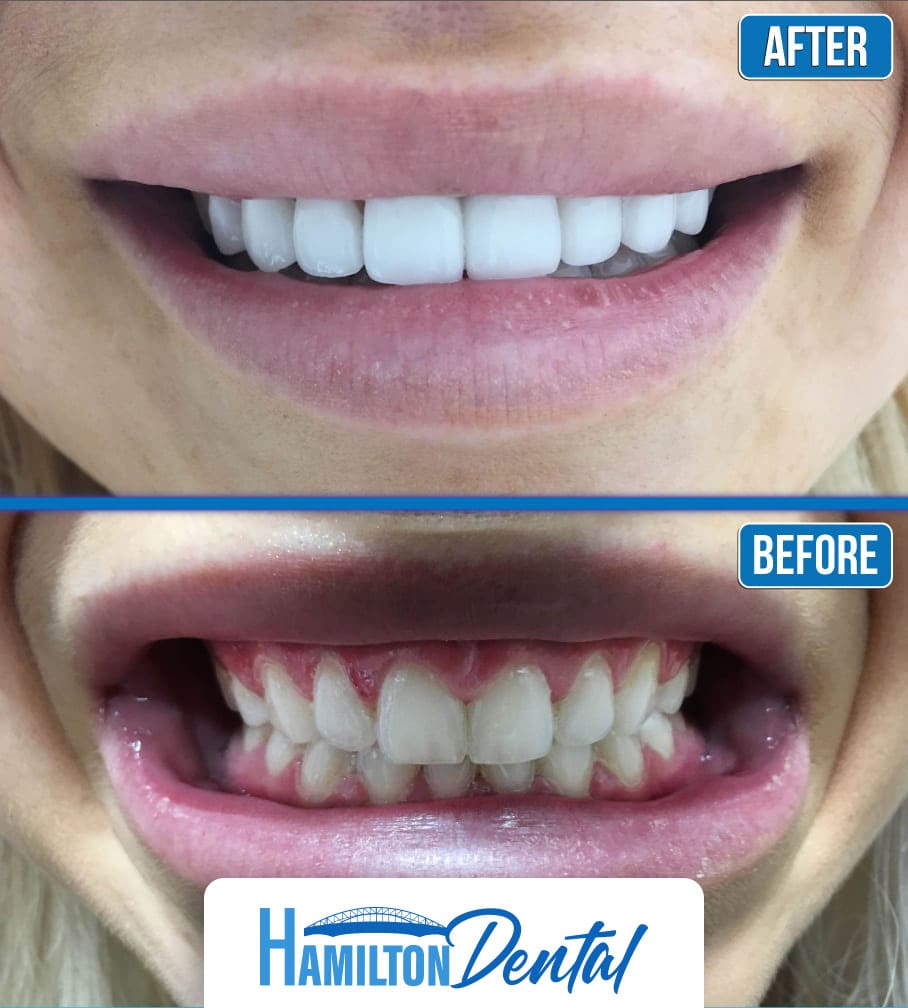
Before & After Photo of Dental Treatment
Before and After Photos FAQs
What are the specific benefits of dental implants for me?
Dental implants are a long-term answer for absent teeth as they look authentic and maintain the health of the jawbone. Dental implants chew and talk just like real teeth. Furthermore, they stop the surrounding teeth from moving into the gap and shifting the bite.
What is the expected timeline for the entire dental implant process?
The dental implant procedure typically involves several stages:
- Consultation and Planning: This includes the first evaluation and imaging to determine how best to proceed with the implants.
- Implant Placement: This is the surgical procedure in which implants are placed in the patient’s jawbone.
- Healing Period: This is the time the patient is required to wait for the implant to integrated with the jawbone (osseointegration). This process can take several months.
- Restoration: This is the procedure in which a crown or bridge is connected to the implant.
The entire process can take several months to complete, depending on individual healing times and any additional procedures required.
What are the potential risks and complications associated with dental implants?
While dental implants are generally safe, potential risks include:
- Infection: At the implant site.
- Implant Failure: Due to insufficient bone density or other factors.
- Nerve Damage: Leading to numbness or pain.
- Sinus Issues: Particularly with upper jaw implants.
Make sure to discuss all of these possible complications with your dentist.
How should I prepare for the dental implant procedure?
Preparation may include:
- Pre-Surgical Instructions: Comply with dietary or medication instructions given by your dentist.
- Arranging Transportation: Someone should drive you both ways because you may be sedated.
- Medical History Review: You should inform your dentist about your medical conditions and medications you take.
What is the expected recovery time after dental implant surgery?
Recovery time varies but generally includes:
- Initial Healing: A few days post surgery uncomfortable swelling may be experienced.
- Bone Integration: It takes several months for the implant to integrate with the jawbone.
- Final Restoration: Once healing is complete the crown or bridge will be placed.
Your dentist will provide specific aftercare instructions to ensure optimal healing.
What are the costs associated with dental implants, and does insurance cover them?
The cost of dental implants depends on various factors such as how many implants you are getting, the kind of restoration you need, and the bone grafting and/or additional procedures that may be required. Talk to your dentist about the cost and discuss the insurance coverage with your insurance company.
How can I maintain my dental implants to ensure their longevity?
Maintaining dental implants involves:
- Regular Oral Hygiene: Brushing and flossing daily to prevent plaque buildup.
- Routine Dental Check-ups: Scheduling regular visits to monitor implant health.
- Avoiding Hard Foods: To prevent damage to the implant or restoration.
- Quitting Smoking: Smoking can impair healing and increase the risk of complications.
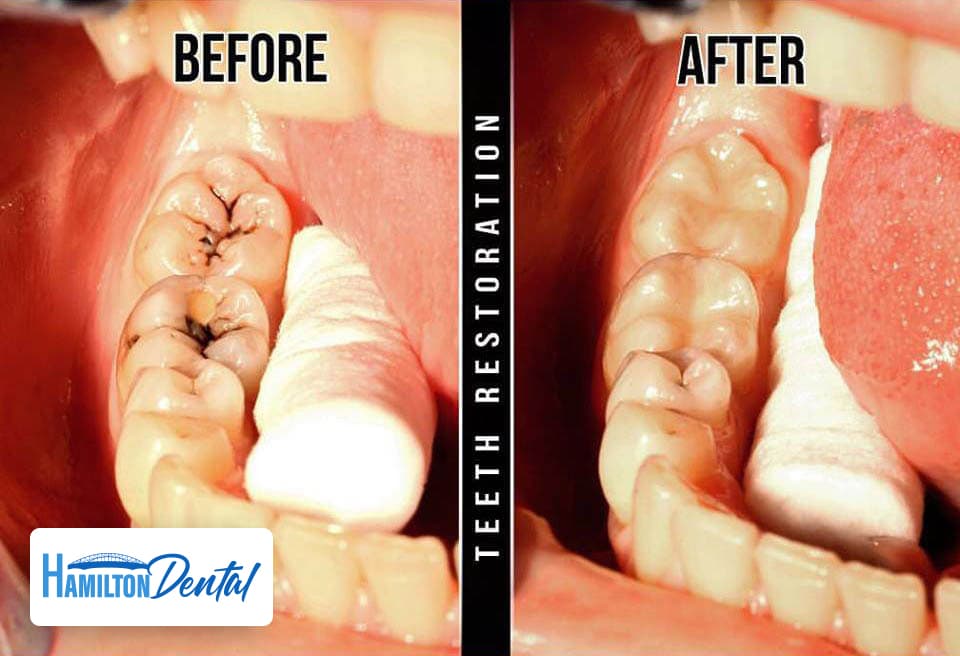
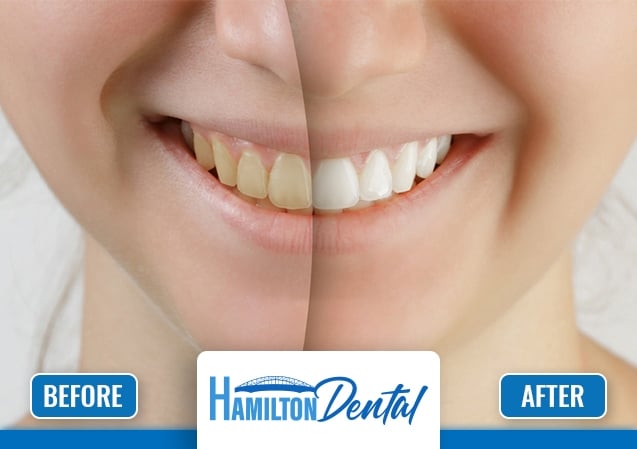
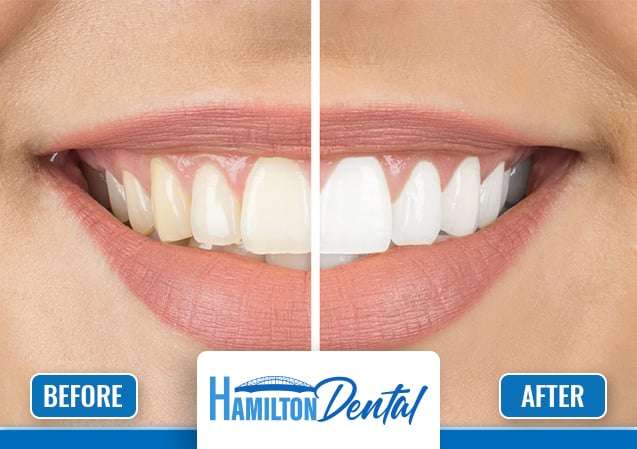
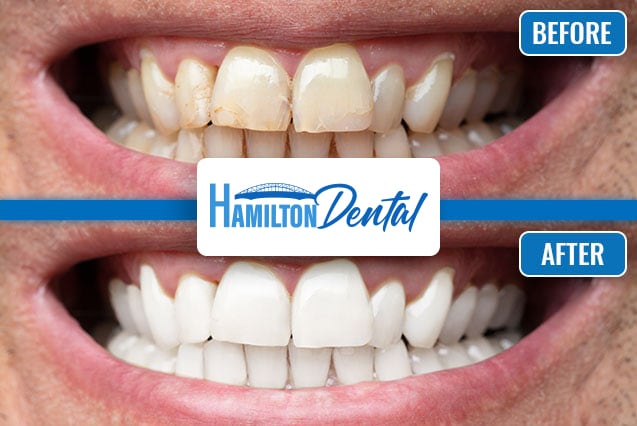
Can I see before-and-after photos of previous dental implant cases?
Before-and-after photos can be great for gaining perspective on what dental implants can do for you. Like all dental practices, Hamilton Dental has photos of their work. Keep in mind you should request photos of work similar to what your dentist will be doing on your mouth.