
Why Choose Hamilton Dental?
Latest
Technologies
For the most comfortable and painless tooth implant procedures, we use the latest tools and cutting-edge technology.
Open Every
Day
We are here to accommodate your busy schedule.
Mon – Fri: 7 am – 9 pm
Sat – Sun: 8 am – 6 pm

Free On-Site
Parking
Our clinic is conveniently located 5 min downtown. The parking on-site is free, so please don’t hesitate to visit during our business hours.
Industry-leading Dental Implants in Hamilton
We only provide world-class dental hardware to our patients at Hamilton Dental. Here is more information about the dental implant hardware that we employ:
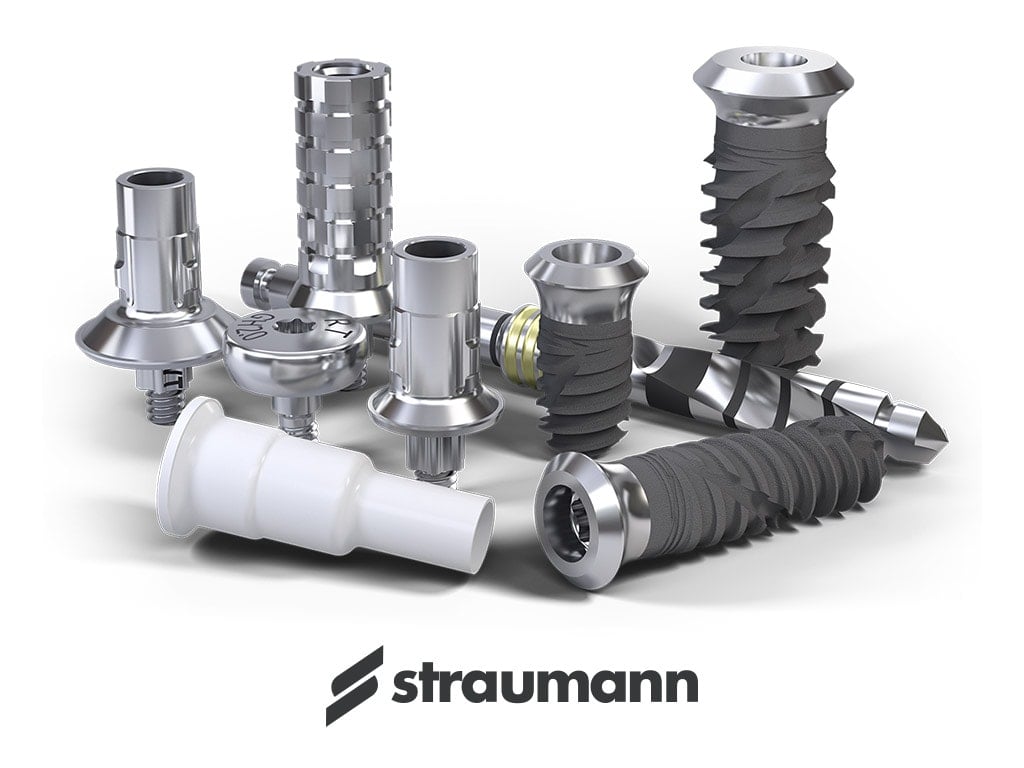
Straumann Implants
The Straumann® Dental Implant System is one of the leading dental implant companies worldwide. Their products are designed with simplicity and freedom of choice in mind. Their portfolio features a wide range of unique materials and surfaces with advanced technologies, like Roxolid® and SLActive®.
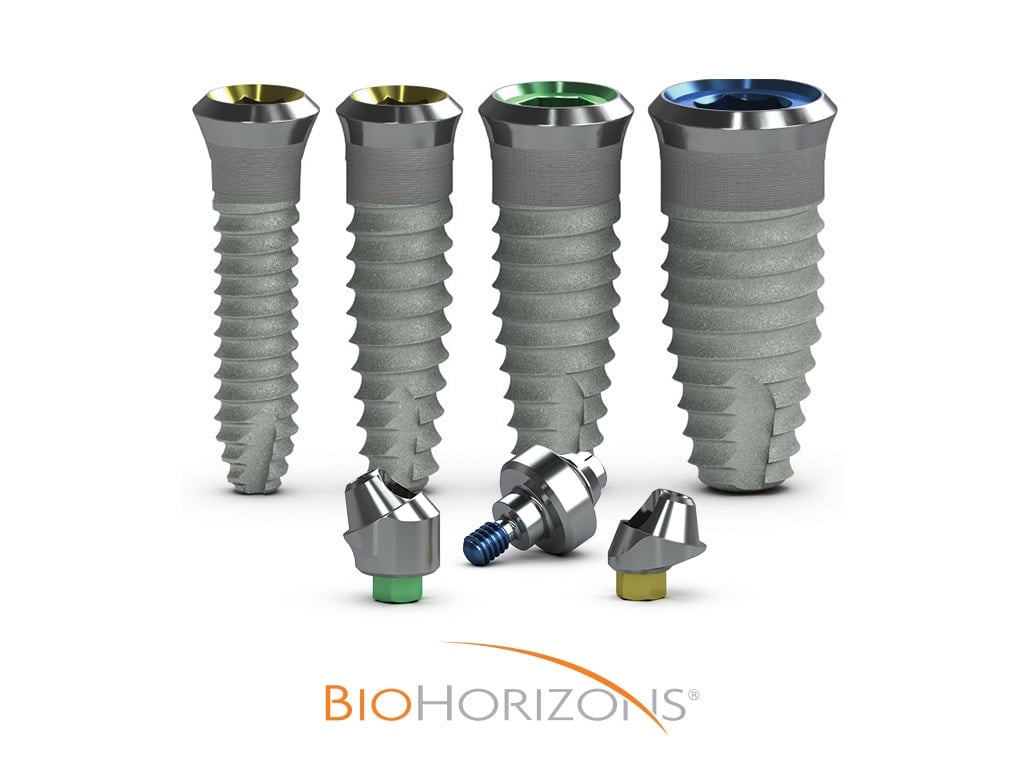
BioHorizon Implants
The BioHorizon dental implants are backed by the most comprehensive and in-depth research available in the industry. It is therefore one of our preferred methods of creating natural-looking, fully functional restorations that will last a lifetime with proper care.
Types of Dental Implants
Dental implants can be classified into two distinct types. The size of your jawbone will determine which one your dentist will recommend.
Endosteal Implants
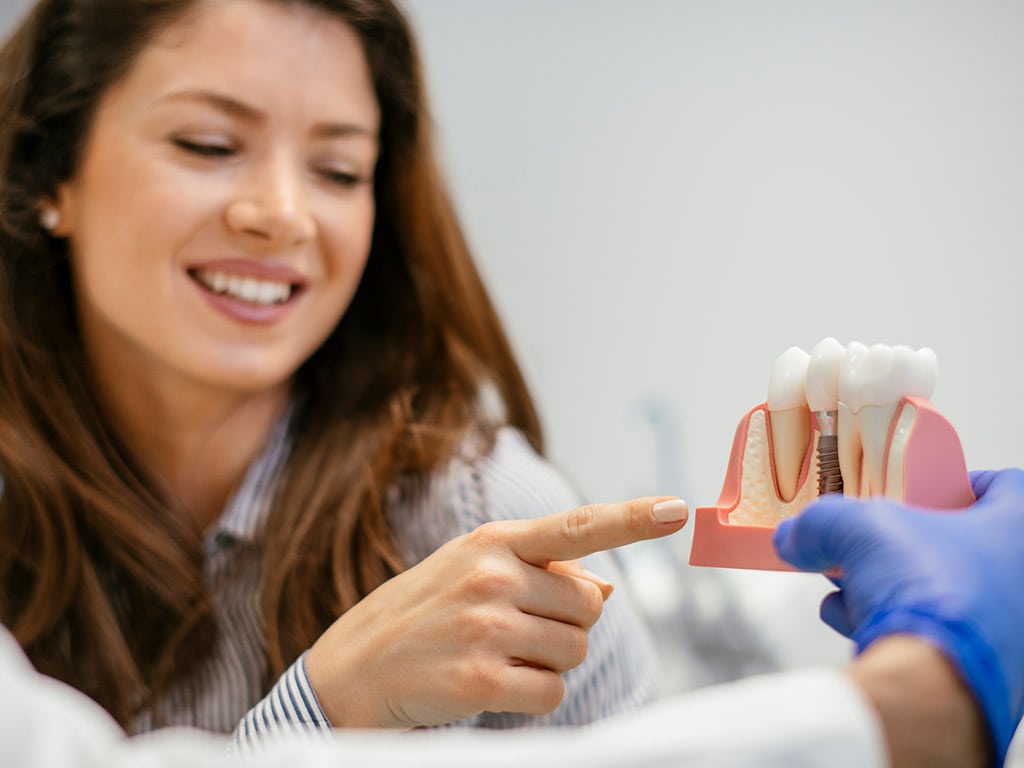
Endosteal implants are the most commonly used type of dental implant. In certain cases, they are used as an alternative to a bridge or removable denture. Endosteal implants are available in screw (threaded), cylinder (smooth) or bladed varieties.
The prosthodontists at our office can help you select which type of dental implant will be best for you. Endosteal implants are safe, effective, and remain the most popular option today.
Subperiosteal Implants
If your jawbone is shallow, your dentist may recommend a subperiosteal implant.
Subperiosteal implants use a metal frame that is inserted between the jawbone and the gum beneath the periosteum (a thin layer of tissue between the gums and the jawbone). They are placed under the gum tissue on top of the bone. Because the implant resides atop the jawbone rather than being drilled into it, the amount and shape of the jawbone will have no effect on the implant.
Subperiosteal implants usually heal faster than endosteal implants. However, surgical procedure times and office visits are about the same.

All on 4 Dental Implants
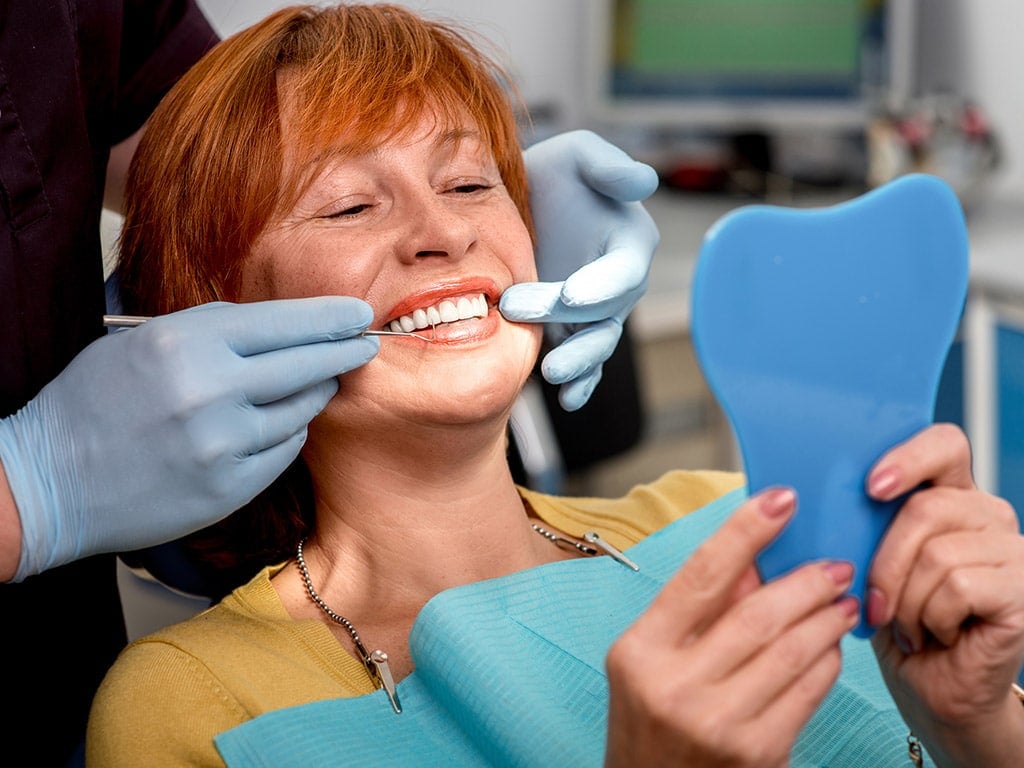
The All-on-4 implant eliminates the need to replace each lost tooth individually. Instead, four titanium posts are surgically implanted into your jawbone to serve as the main anchors. A permanent denture will be attached to each of these areas for a seamless appearance throughout the mouth.
Permanently affixed to your mouth, the prosthesis will look just as natural as the rest of your teeth.
Advantages of Dental Implants
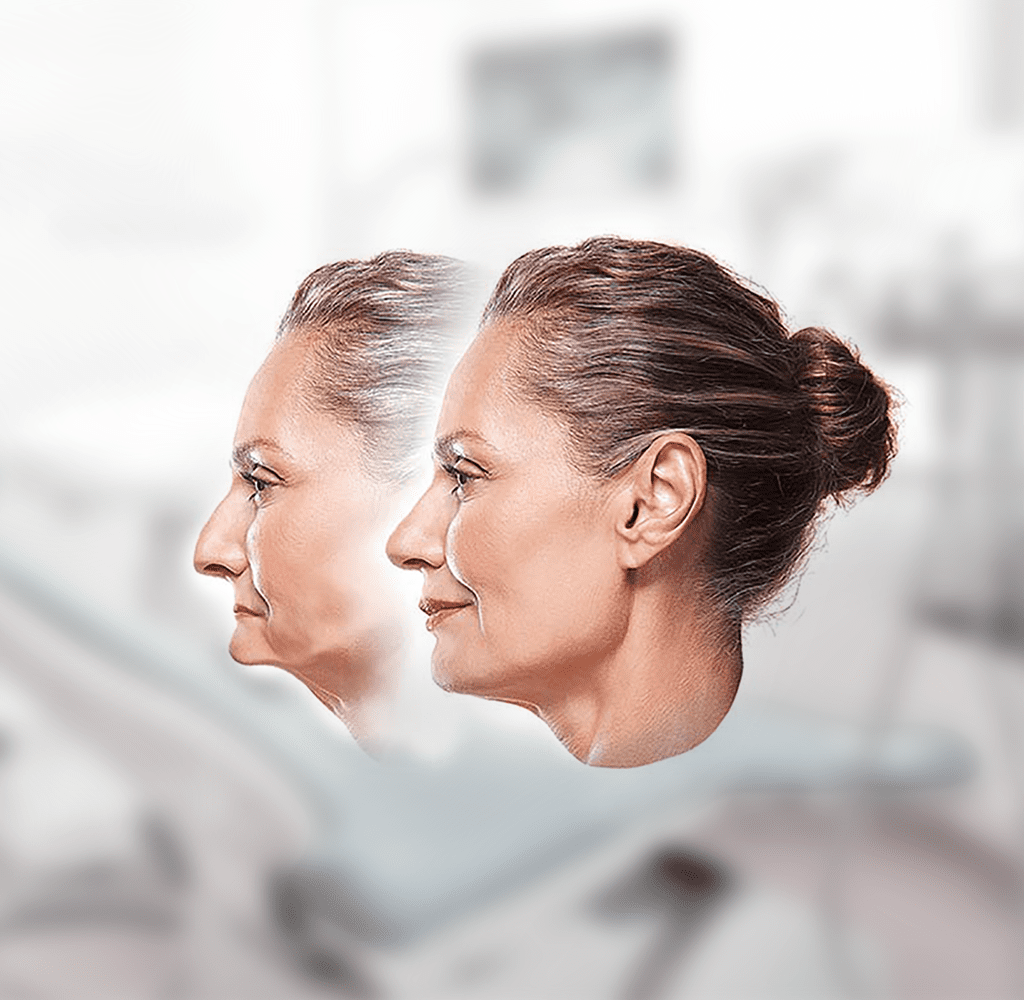
Missing teeth do more than impact your smile and confidence; they negatively affect your speech, muscle tone, face shape, and your ability to chew. The alignment of your remaining teeth may also be affected if you do not replace your missing teeth.
Dental implants can restore your smile to its former glory regardless of whether gum disease, trauma, or other health issues led to the loss of your teeth.To qualify for dental implants, you must have healthy gums and sufficient bone to accommodate the implant. It is possible to use a subperiosteal implant in the absence of adequate bone, or you may require a bone graft. Our team will thoroughly analyze your dental problems and advise you on the best course of action to restore a healthy smile.
Dental Implant Procedure
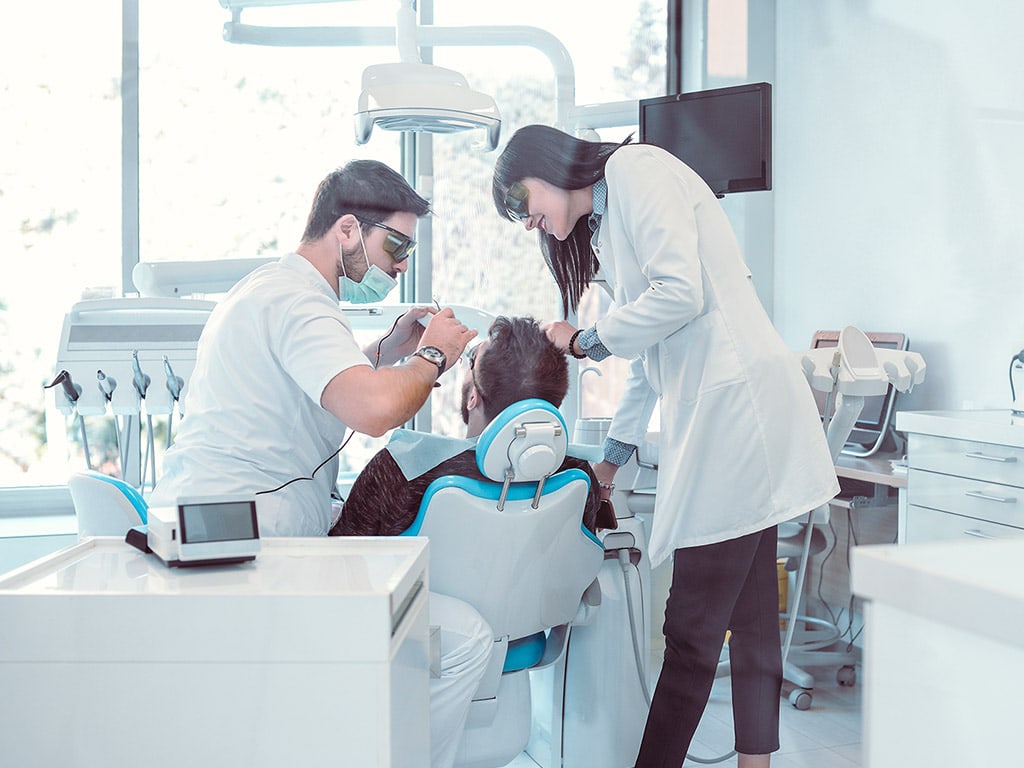
Dental implant surgery is used to substitute the roots of missing teeth. In this procedure, titanium posts are surgically implanted into your mouth to serve as substitutes for your roots. These implants can be placed in or above your jawbone to effectively replace missing teeth and serve as a safe, secure, and long-term solution.
When it’s time to place the dental implant, the dentist will directly insert it into the socket where your tooth once resided. Over the following 3 to 6 months, your implant will heal and start bonding with the bone in your jaw. The key to this phenomenon is titanium’s unique ability to osseointegrate with your bone structure. In essence, that means that your body will start to think that the titanium implant is a natural part of it. As your jaw bone heals and bonds with the implant, it is permanently anchored in place.
Once the implant has healed, it will function just like a natural tooth. The pressure applied to the implant when you bite and chew is transmitted directly into the jawbone, stimulating it and thereby preventing its degradation and loss of bone mass.
In addition to looking and feeling natural, dental implants can last a lifetime if properly maintained.
Related Procedures Offered By Hamilton Dental
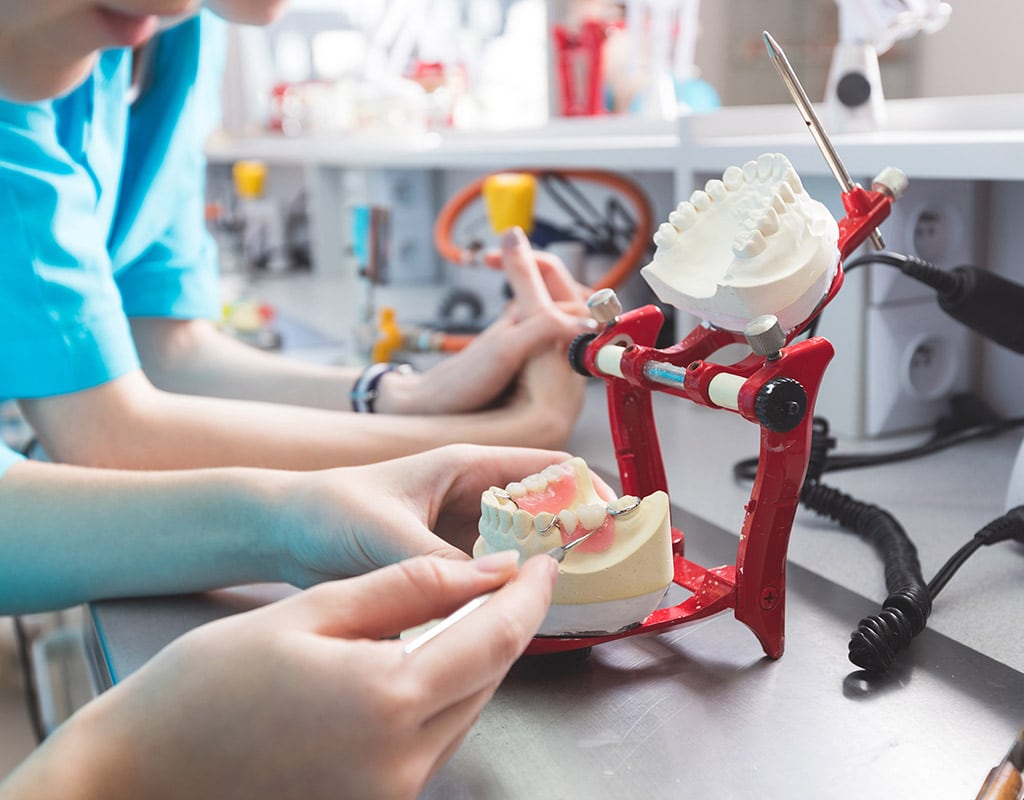
Dentures
A denture is a prosthetic dental appliance that replaces missing teeth. Unlike dental bridges and dental implants, which are permanently anchored to your jawbone, dentures are attached to a supporting structure. As a result, they are removable and easier to clean and maintain.
Dentures can be divided into two types: full and partial. Partial dentures are used when some natural teeth still remain in the mouth while full dentures are used when all the teeth are missing.
We will help you determine which type of denture best suits your needs.
Fixed Bridgework
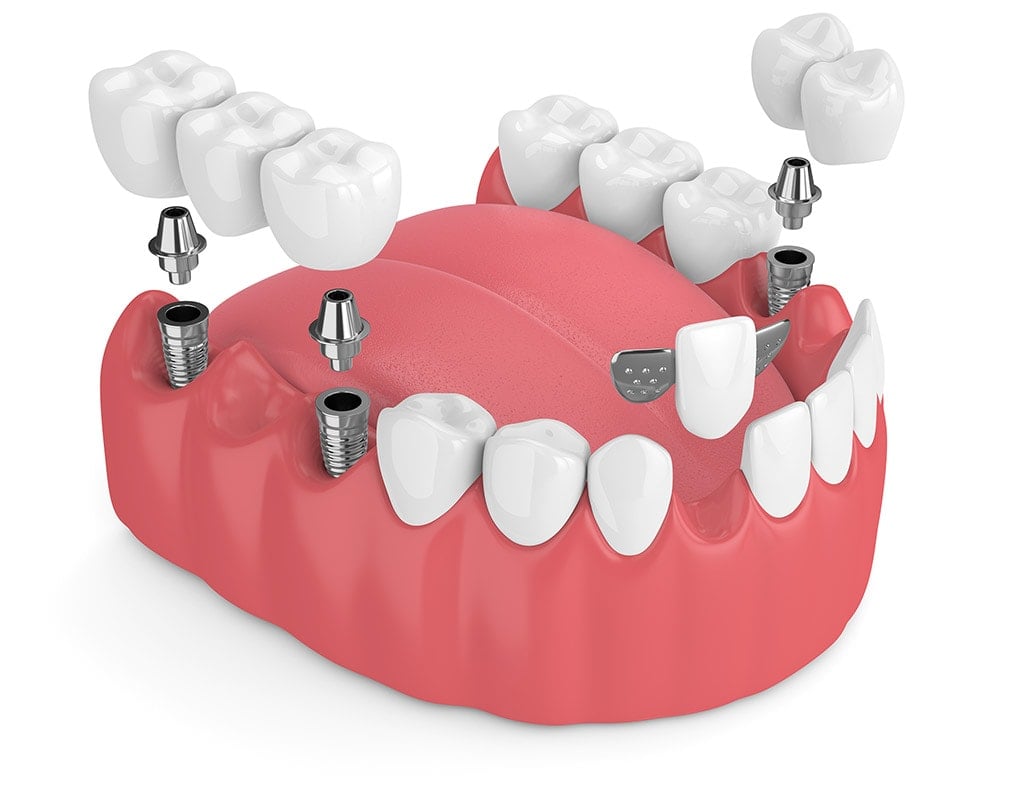
If you are missing one or more teeth, a dental bridge will be able to replace those teeth with artificial ones. Bridges are typically constructed with crowns on either side of the missing tooth or teeth, with the pontic (false tooth) cemented into place.
Bridgework is essential if you have multiple missing teeth. Fixed bridges rely on dental implants to provide stability, whereas traditional bridges require support from the teeth that remain in your mouth.
Book a FREE,
No-Obligation Consultation
We will provide you with a free initial consultation. One of our best dental implant surgeons in Hamilton will analyze your teeth and recommend a course of action.
Tooth Implant Sedation Methods
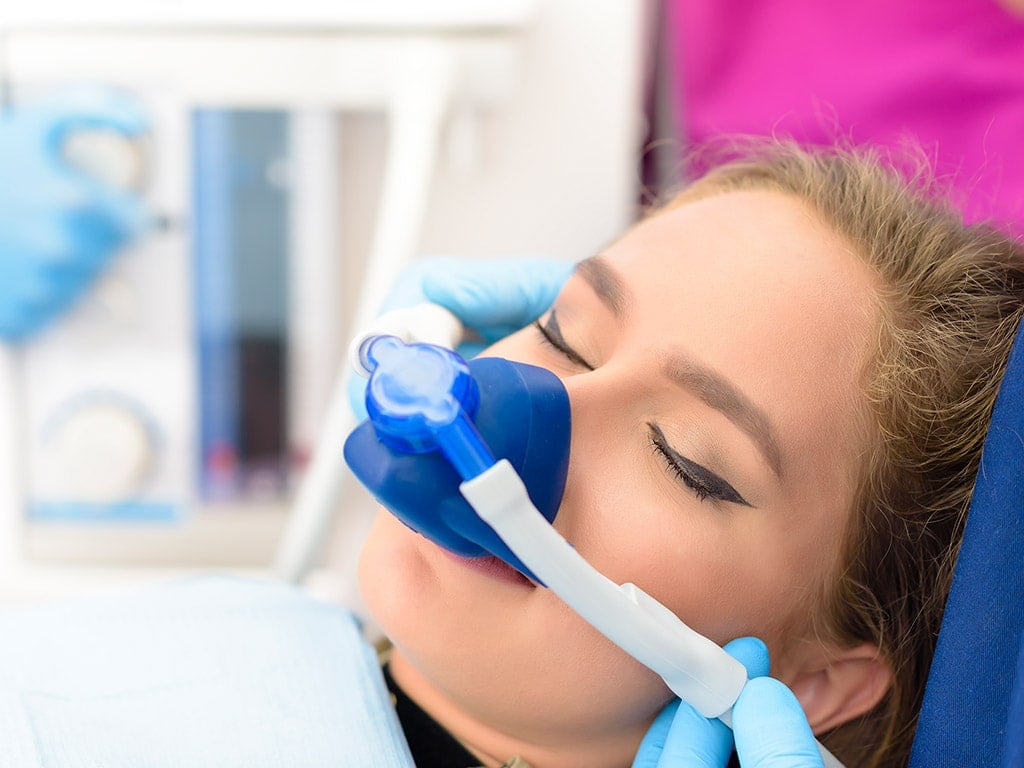
Dental implants are considered highly invasive procedures, and sedation is often recommended. Your dentist will decide which type is most appropriate for you based on the extent of the procedure, as well as your comfort level.
Hamilton Dental offers various types of sedation, such as laughing gas (or nitrous oxide), intravenous sedation, and deep sedation. If you are in good health, IV sedation is the preferred method, as it can significantly reduce your pain and anxiety and allow the dentist to get more done at one time rather than requiring several appointments.
Speak With One of Our Dental Implant Specialists Now
Call now to speak with one of our experienced oral physicians about getting dental implants in Hamilton. We are happy to answer any questions you may have.
Dental Implants in Hamilton FAQs
- Longevity: With proper care, implants can last a lifetime.
- Bone Preservation: They help prevent jawbone deterioration by stimulating bone growth.
- Natural Appearance: Implants look and function like natural teeth.
- Improved Comfort: Unlike dentures, implants are fixed and won’t slip.
- Endosteal Implants: The most common type, placed directly into the jawbone.
- Subperiosteal Implants: Used when there is insufficient bone height; placed under the gum tissue but on top of the jawbone.
- All-on-4 Implants: A full-arch restoration using four strategically placed implants to support a complete set of teeth.
- Consultation and Imaging: Assessment of oral health and planning using X-rays or 3D imaging.
- Implant Placement: Surgical insertion of the implant into the jawbone.
- Healing Period: Allowing time for the implant to integrate with the bone (osseointegration).
- Restoration: Attaching a crown, bridge, or denture to the implant.